Dry Type Transformer Guide: Safety, Specs, and Selection
Anyone specifying electrical equipment for a hospital, a high-rise, or a busy manufacturing floor eventually runs into the same question: how do you deliver medium-voltage power indoors without introducing a fire hazard? A dry type transformer answers that question directly. It steps voltage up or down using air and solid insulation instead of oil, which removes the flammable liquid that has caused problems in enclosed spaces for decades. This guide walks through how the technology works, where it fits, and what to check before you buy one.
Why Indoor Power Distribution Needs a Different Transformer
Oil-immersed transformers dominate outdoor substations because oil is an excellent coolant and insulator. Put that same unit inside a basement or a mall, though, and the calculus changes. Oil leaks, oil fires, and the containment systems needed to manage both add cost and risk that building codes increasingly restrict.
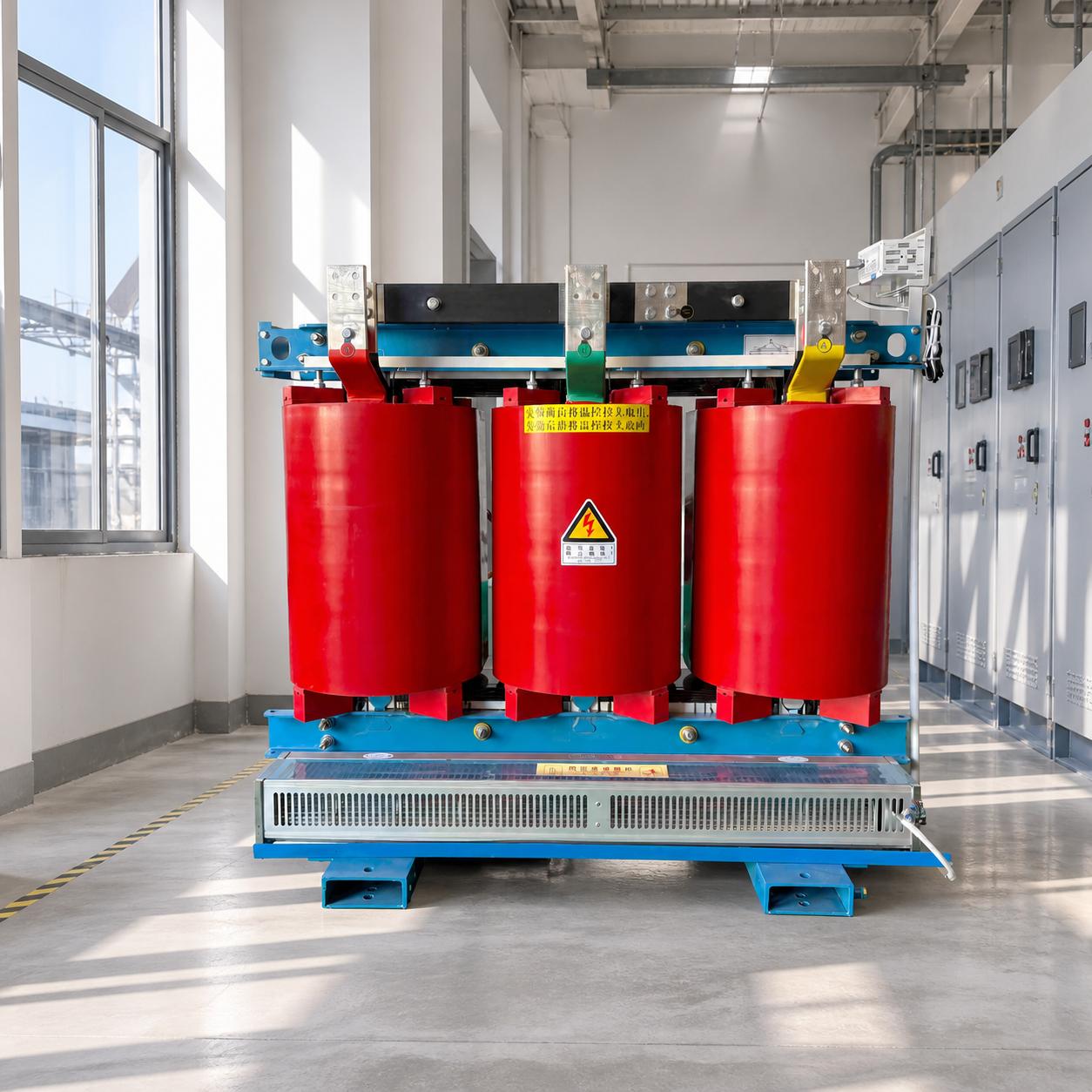
Dry type units sidestep the issue by cooling with ambient air and insulating the windings with solid resin rather than liquid. There is no oil to leak, no bund wall to build, and no fire suppression system sized around a flammable dielectric fluid. That single design choice is why dry type transformers have become the default for basements, rooftop plant rooms, and any space where people work near the equipment.
How Vacuum Pressure Impregnation Builds Reliability
The insulation process is where a dry type transformer earns its long service life. FORUI units are built using vacuum pressure impregnation, a manufacturing method where resin is drawn into the windings under vacuum, then cured under pressure so it fully saturates the coil.
That thoroughness matters more than it sounds. Air pockets in resin-cast coils become weak points where moisture collects and partial discharge starts, slowly degrading insulation over years of thermal cycling. A void-free casting resists that degradation, which according to the manufacturer's product information is why this VPI construction is associated with low partial discharge readings and stable thermal performance under sustained load.
Grade F insulation, used across this product line, gives the windings a higher continuous operating temperature margin than lower-grade systems. In practical terms, that margin is what lets a transformer ride through short-term overloads on a hot summer afternoon without accelerating insulation aging.
Core Material: Amorphous Alloy Versus Standard Silicon Steel
Every transformer wastes some energy as heat in the core, even at zero load, simply from the magnetic field cycling back and forth. This is called no-load loss, and it runs continuously for as long as the transformer is energized, which for most units means every hour of every day.
Amorphous alloy cores reduce this waste more effectively than standard silicon steel because their disordered atomic structure resists the magnetic domain friction that generates heat. FORUI offers both core types, and the right choice depends on how the transformer will actually be used:
| Core Type | Typical No-Load Loss | Best Suited For |
|---|---|---|
| Standard silicon steel | Moderate | Facilities with variable or intermittent load profiles |
| Amorphous alloy | Lower | Continuous-duty applications like hospitals, data centers, water treatment |
A transformer that idles most of the day, powering equipment used only in bursts, won't see the same payback from an amorphous core as one running near-constant load in a 24-hour facility. Matching core material to duty cycle is a decision worth making before purchase, not after.
Technical Specifications at a Glance
| Parameter | Range |
|---|---|
| Cooling method | Air cooling |
| Insulation | Solid, Class F |
| Core type | Amorphous alloy or standard silicon steel |
| Capacity | 100 kVA to 3500 kVA |
| Voltage class | 6 kV to 35 kV |
| Output voltage | 0.4 kV |
This range covers most commercial and light industrial needs. A 100 kVA unit might serve a small retail complex, while a 3500 kVA transformer sits comfortably feeding a mid-sized factory. Voltage class up to 35 kV means the same product family can connect to a wide range of regional medium-voltage distribution standards, which simplifies specification for projects spanning multiple sites.
Where the Compact Footprint Actually Pays Off
Oil-filled units generally require clearance zones, oil containment pits, and sometimes separate fire-rated vaults. Dry type transformers skip most of that, and the space savings compound quickly in dense buildings.
Consider a hospital basement mechanical room. Every square meter given to electrical infrastructure is a square meter not available for medical gas systems, backup generators, or water treatment equipment. A compact, robust dry type unit that mounts directly on a concrete pad, without a containment berm, frees up real floor space that architects and facility engineers can put to better use elsewhere.
The same logic applies to high-rise commercial towers, where transformer rooms sit on upper floors near the loads they serve. Getting oil-filled equipment that high, along with its containment requirements, is a logistical and regulatory headache that dry type construction avoids entirely.
Tap Changers and Adjusting for Real-World Voltage Drift
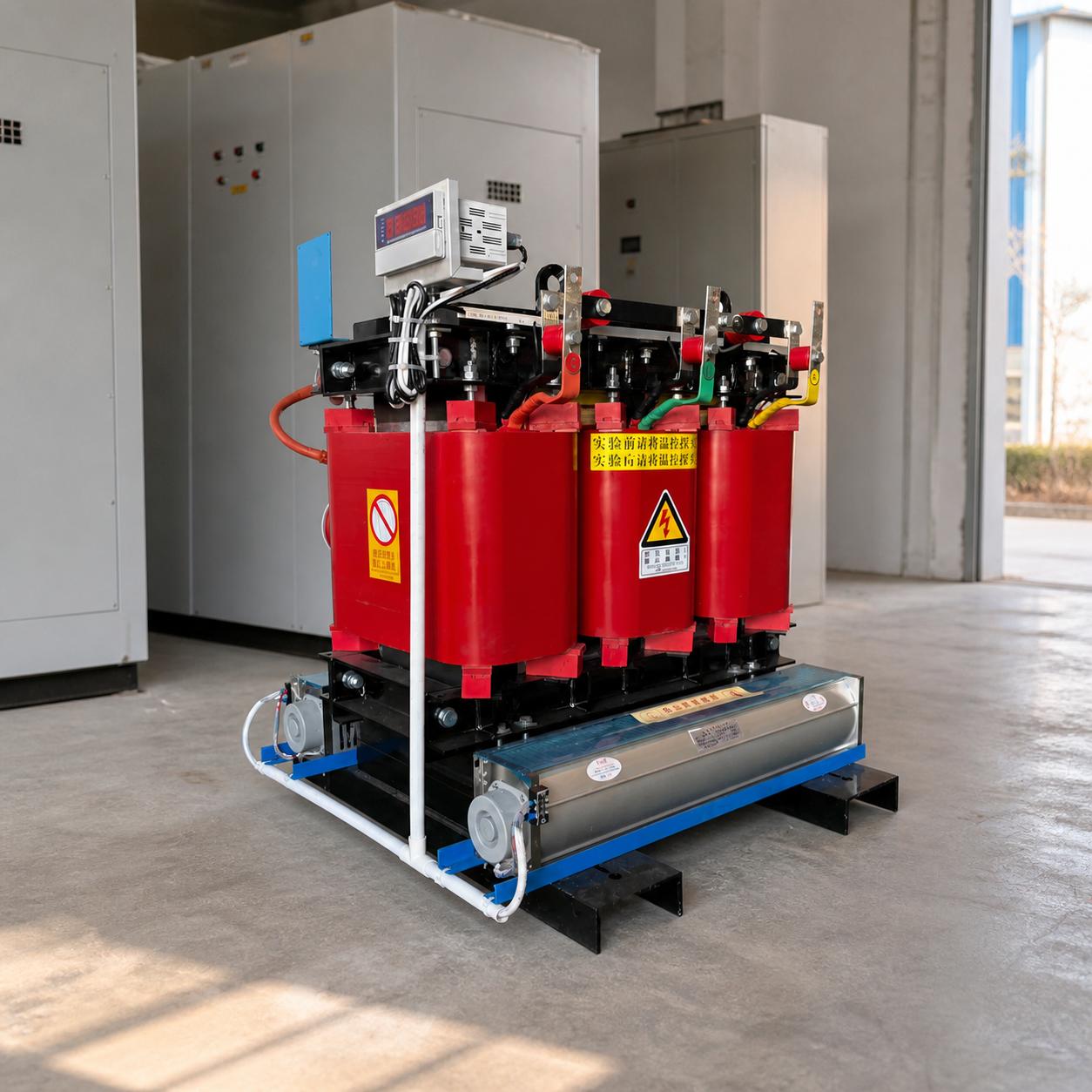
Grid voltage is rarely perfectly stable. Long feeder runs, seasonal load swings, and upstream transformer taps all shift the voltage a facility actually receives. An off-load tap changer, mounted on the side of the coil in this product line, lets technicians manually adjust the turns ratio to compensate.
This isn't a set-and-forget feature. Facilities managers should check incoming voltage periodically, particularly after utility infrastructure changes nearby, and adjust the tap setting accordingly during a scheduled outage. Getting this wrong in either direction, running the secondary too high or too low, quietly stresses connected equipment over months even when nothing fails outright.
Choosing the Right Unit for Your Project
Selecting a dry type transformer isn't just about matching kVA to load. Work through these steps in order:
- Calculate total connected load, then add margin for future expansion rather than sizing exactly to today's demand.
- Confirm the incoming voltage class matches your utility's medium-voltage distribution standard, typically somewhere in the 6 kV to 35 kV band.
- Decide whether continuous duty justifies the amorphous core premium, based on your facility's actual load profile.
- Check physical clearance and ventilation requirements against the room where the unit will sit, since air cooling depends on adequate airflow.
- Review terminal and busbar configuration against your switchgear to confirm compatibility before ordering.
Skipping the sizing step is the most common and costly mistake. A transformer sized too close to peak load runs hotter, ages faster, and leaves no headroom if the building adds equipment later.
Frequently Asked Questions
Is a dry type transformer less efficient than an oil-immersed one?
Not necessarily. Efficiency depends more on core material and load factor than cooling method. A well-matched dry type unit with an amorphous core can perform comparably to an oil-filled equivalent, particularly at partial load.
Can dry type transformers be installed outdoors?
They're primarily designed for indoor use. Outdoor installation requires an appropriate weatherproof enclosure, since the open-air cooling design isn't built to handle direct rain or extreme ambient exposure without additional protection.
How often does the insulation need inspection?
There's no oil to sample or filter, which simplifies maintenance considerably. Most facilities schedule a visual inspection and partial discharge check annually, more frequently in dusty or humid environments.
What does the digital temperature monitor actually do?
It tracks winding temperature in real time, which helps facility staff catch abnormal heating trends before they become insulation failures, rather than waiting for a thermal event to reveal a problem.
Matching the Transformer to the Building, Not Just the Load
The right dry type transformer is the one that fits both the electrical load and the physical realities of where it sits, including ventilation, access for maintenance, and future capacity needs. Specifying purely on kVA and ignoring installation context is how facilities end up with equipment that runs hotter than it should or leaves no room to grow.
For us, that means offering capacity from 100 kVA to 3500 kVA across a 6 kV to 35 kV voltage range, with both amorphous and standard core options, so that a hospital, a mid-sized factory, and a commercial tower can each find a configuration suited to their actual operating conditions. Working through load calculations, duty cycle, and room constraints before selecting a unit remains the most reliable way to get a dry type transformer that performs well for the long haul, not just on the day it's commissioned.
Recent Posts
- FORUI Makes a Strong Appearance at ENERGETAB Poland 2025, Deepening European Market Presence
- FORUI Presents at Uzbekistan Energy Week 2025, Contributing to Central Asia's Energy Development
- FORUI Shines at Electrical Networks of Russia 2024, Showcasing Strength of Intelligent Manufacturing
- Power Transformer Basics: How Oil-Immersed Units Keep the Grid Running
- Compact Substation: Engineering Precision in Modular Power Distribution
SUBSCRIBE
INQUIRY