Resin Cast Dry Type Distribution Transformer: A Practical Guide to Safe Indoor Power Supply
A resin cast dry type distribution transformer solves a problem that keeps surfacing in facility planning: how do you step down voltage safely in spaces where people work, walk, or store flammable goods nearby? Unlike oil-filled units, these transformers encapsulate their windings in solid epoxy resin, removing the fire and leakage risks tied to liquid dielectrics. That single design choice reshapes where and how engineers can place power equipment.
Why Facility Managers Choose Dry Type Over Oil-Filled Units
Oil-immersed transformers have served the grid for decades, and they still make sense for many outdoor substation applications. But oil carries baggage. It burns under fault conditions, it requires containment pits or fire walls, and it demands periodic sampling to check for moisture or dissolved gas buildup.
A resin cast dry type distribution transformer sidesteps most of that maintenance burden. The epoxy resin fully seals the copper or aluminum windings, so there's no fluid to leak, no fire suppression system to install, and no spill containment to budget for. That's precisely why hospitals, shopping centers, and high-rise office buildings specify dry type units for indoor substations near occupied spaces.
The tradeoff is cost. Resin casting is a more involved manufacturing process than filling a tank with mineral oil, so upfront pricing tends to run higher. Facility owners weigh that against reduced fire insurance premiums and lower long-term maintenance labor, and for buildings with people inside, the math usually favors resin cast.
How the Resin Encapsulation Actually Works
The term "cast resin" refers to a vacuum casting process. Manufacturers wind the coils, then place them in a mold and inject epoxy resin under vacuum to eliminate air voids. Once cured, the resin forms a hard, void-free insulating shell around each winding layer.
This matters for two practical reasons. First, the absence of air pockets reduces the risk of partial discharge, a slow degradation mechanism that erodes insulation over years of operation. Second, the solid resin block gives the winding mechanical rigidity, which helps it withstand the vibration and thermal cycling that come with daily load swings.
Compare that to open-wound dry type transformers, which use varnish-impregnated windings without a solid resin shell. Those units are lighter and cheaper but more exposed to dust, humidity, and chemical contamination. In a clean, climate-controlled electrical room, that may not matter. In a coastal facility or a food processing plant with washdown cycles, resin cast construction earns its premium.
Fire Safety and Flame Class Ratings
Flame resistance is the headline reason building codes favor resin cast units in occupied structures. The resin formulations used in these transformers are typically self-extinguishing, meaning they don't sustain combustion once an external ignition source is removed. That's a meaningfully different risk profile than mineral oil, which actively feeds a fire once ignited.
This is why you'll find resin cast dry type distribution transformers specified in:
- Underground parking structures and basement electrical rooms
- Data centers where downtime and fire risk both carry steep costs
- Schools, airports, and transit stations with strict public safety codes
- Mining and tunnel applications where confined spaces limit evacuation routes
None of this means dry type transformers are fireproof in an absolute sense. Any electrical equipment can fail under severe overload or insulation breakdown. The distinction is that resin cast units don't add fuel to the problem the way an oil tank rupture would.
Sizing and Specifying the Right Unit
Picking the right transformer isn't just about kVA capacity. Several factors interact, and getting the sizing wrong leads to either wasted capital or an undersized unit that trips on load spikes.
- Calculate actual load, not nameplate load. Add up connected equipment, apply realistic demand factors, and leave headroom for future expansion rather than sizing to today's exact draw.
- Check altitude and ambient temperature derating. Dry type transformers rely on air cooling, so units installed at high altitude or in poorly ventilated rooms need capacity derating or forced-air cooling kits.
- Match the insulation class to the environment. Standard resin systems handle typical indoor conditions, but facilities with corrosive air or extreme humidity may need upgraded coatings or enclosure protection.
- Confirm impedance and vector group compatibility with upstream switchgear and downstream protective devices before finalizing the order.
Getting these details settled with your supplier before manufacturing starts avoids costly change orders later. For us, this upfront technical review is a routine part of order processing, since resin cast units are built to order rather than pulled from generic stock.
Comparing Dry Type and Oil-Filled Transformers at a Glance
| Attribute | Resin Cast Dry Type | Oil-Immersed |
|---|---|---|
| Fire risk | Low, self-extinguishing resin | Higher, oil is combustible |
| Maintenance | Minimal, no oil sampling | Periodic oil testing required |
| Indoor use | Well suited, no containment needed | Requires fire barriers or pits |
| Typical lifespan | Long service life with proper ventilation | Long service life with oil maintenance |
| Upfront cost | Generally higher | Generally lower |
| Noise level | Comparable, depends on core design | Comparable, depends on core design |
This table simplifies a decision that often comes down to building code requirements first and budget second. If your project sits in a densely occupied building, the fire safety column tends to override the cost column.
Where Compact Substations Fit Into the Bigger Picture
Not every project calls for a standalone indoor transformer room. Urban infill sites, industrial parks, and commercial developments often lack the space for separate medium-voltage switchgear, transformer, and low-voltage distribution rooms. That's the gap a compact outdoor substation fills.
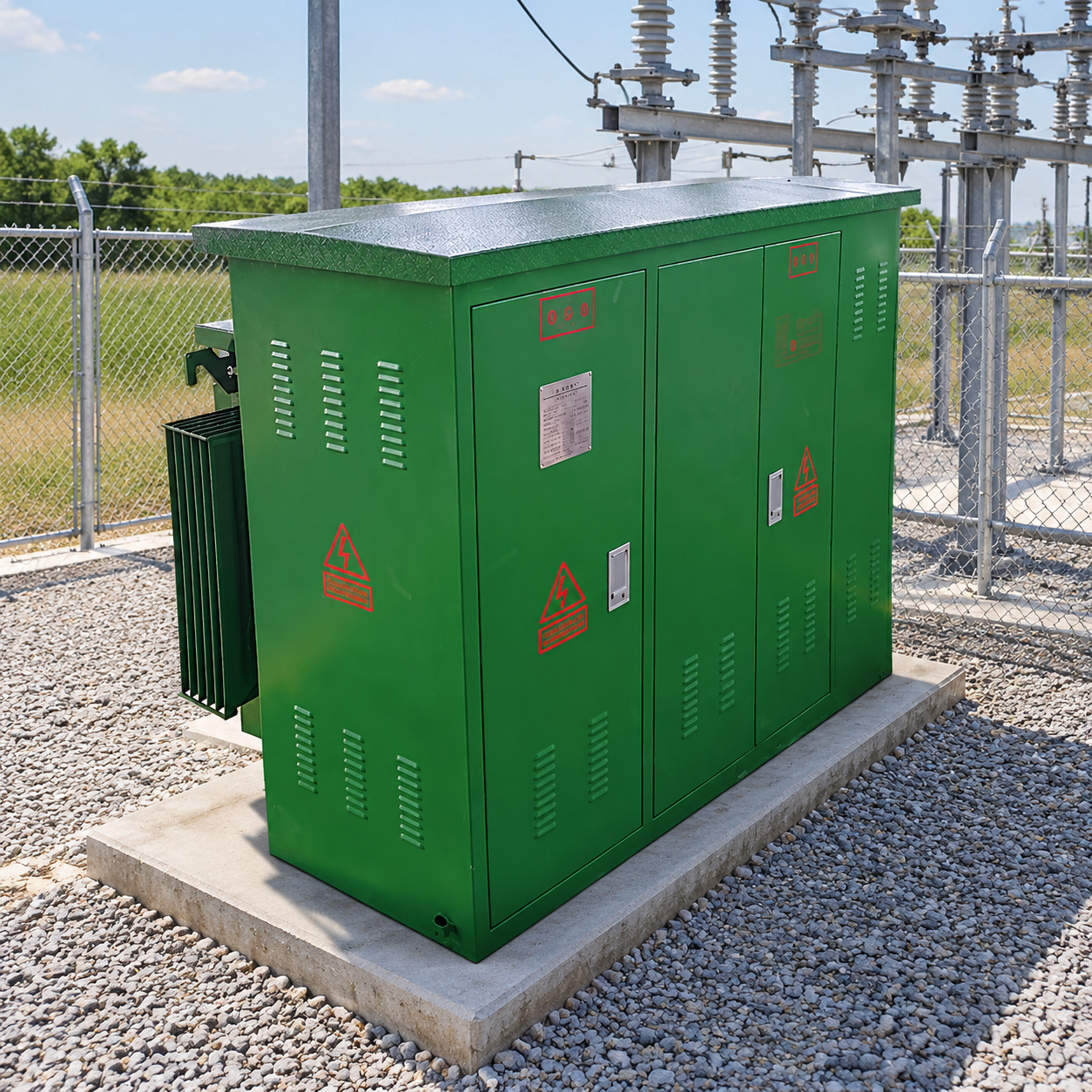
A 3 phase American style compact transformer substation integrates these three functions, medium-voltage switching, transformation, and low-voltage distribution, into a single factory-assembled, sealed enclosure. Rather than coordinating three separate installations, contractors set one tamper-proof unit on a concrete pad and connect it. The sealed structure resists dust, moisture, and corrosion, which matters for substations sitting outdoors through years of weather exposure.
Inside, the layout keeps high-voltage and low-voltage compartments physically separated, with the high-voltage bushings and switches on one side and the low-voltage distribution panel, circuit breakers, and control meters on the other. That separation isn't just a safety convention, it also simplifies maintenance access since technicians working on low-voltage breakers aren't exposed to medium-voltage components a few feet away.
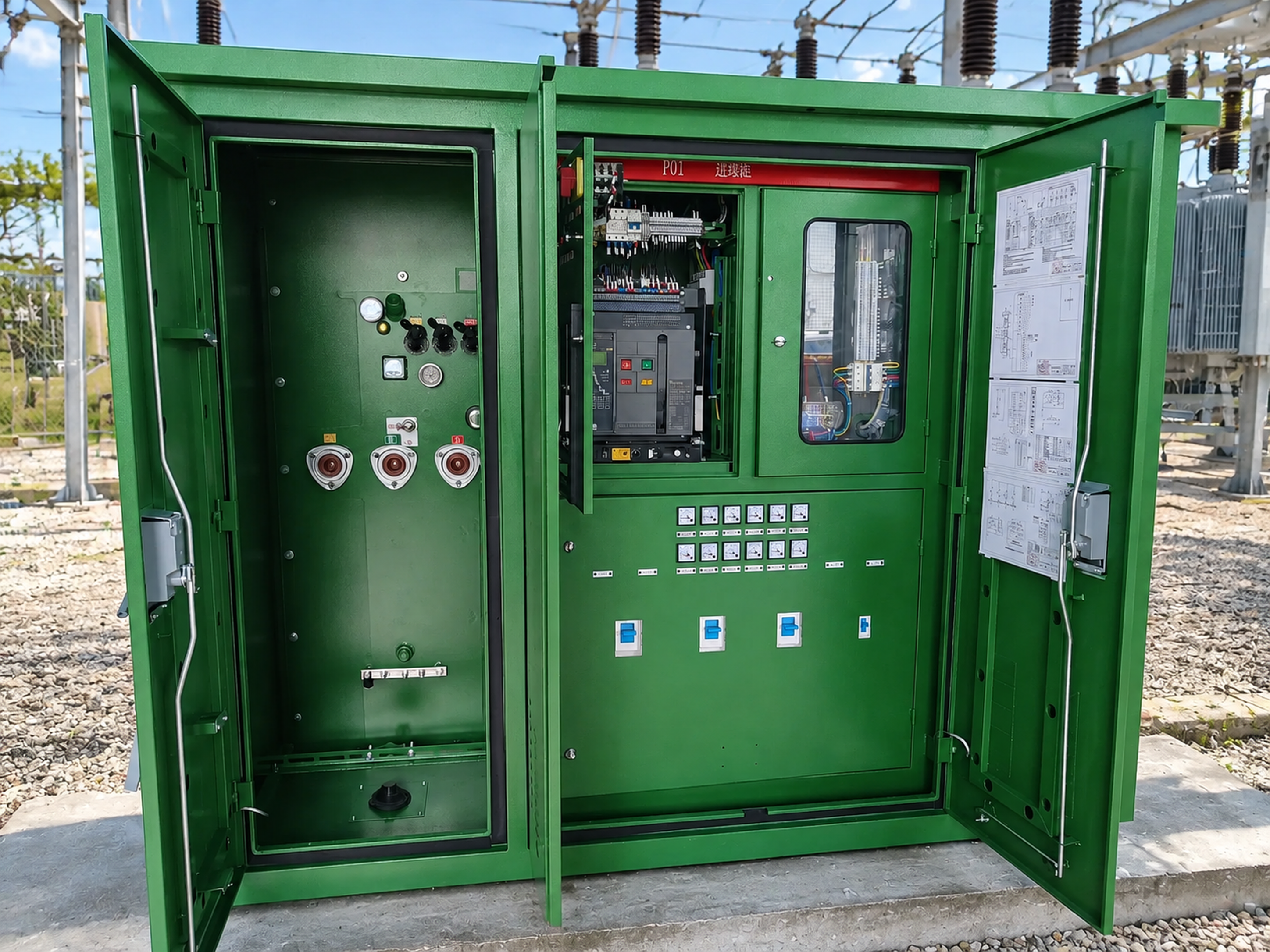
This compact format tends to show up in urban power distribution networks, industrial park power supply projects, and commercial building infrastructure where land is expensive and construction timelines are tight. The pre-assembled nature of the unit shifts work from the construction site to the factory floor, which according to the product's design intent reduces on-site labor hours and shortens the overall project schedule.
Frequently Asked Questions
Does a resin cast dry type distribution transformer need a dedicated ventilated room?
Yes, these units still generate heat through normal electrical losses and rely on natural or forced air circulation. The room needs adequate airflow, but it doesn't need the fire-rated containment or oil spill pits that an oil-filled transformer requires.
Can resin cast transformers be installed outdoors?
They can, with appropriate enclosure protection against rain and direct sun exposure, though they're more commonly specified for indoor or semi-enclosed applications where their fire safety advantage matters most.
How does a compact substation differ from building a transformer room on site?
A compact substation like the 3 phase American style unit arrives pre-assembled from the factory, combining switchgear, transformer, and distribution equipment in one enclosure. Site-built rooms require separate installation and commissioning of each component, which takes longer and demands more coordination between trades.
Is dry type always the safer choice?
In terms of fire behavior, yes, resin encapsulation and self-extinguishing properties reduce risk compared to oil. But overall system safety also depends on proper sizing, ventilation, grounding, and protective relay coordination, regardless of transformer type.
Making the Final Decision
Choosing between a resin cast dry type distribution transformer and other configurations isn't about finding a universally superior product. It's about matching the equipment to the building code, the physical environment, and the operational priorities of the specific site. Indoor facilities with public occupancy or fire-sensitive processes tend to land on dry type. Outdoor distribution projects with space constraints often benefit from an integrated compact substation instead.
FORUI has worked with dry-type, oil-immersed, and special transformer configurations since 2007, and that range matters because no single transformer type fits every project. Whether a facility calls for the fire safety profile of a resin cast dry type distribution transformer or the space efficiency of a compact outdoor substation, the right answer comes from matching equipment specifications to the actual conditions on site, not from defaulting to whatever was used last time.
Recent Posts
- FORUI Makes a Strong Appearance at ENERGETAB Poland 2025, Deepening European Market Presence
- FORUI Presents at Uzbekistan Energy Week 2025, Contributing to Central Asia's Energy Development
- FORUI Shines at Electrical Networks of Russia 2024, Showcasing Strength of Intelligent Manufacturing
- Power Transformer Basics: How Oil-Immersed Units Keep the Grid Running
- Compact Substation: Engineering Precision in Modular Power Distribution
SUBSCRIBE
INQUIRY