What Makes a High-Quality Power Transformer Worth the Investment
Choosing a high-quality power transformer is rarely about chasing the lowest quote. It is about avoiding the much larger cost of unplanned downtime, wasted energy, and premature replacement. Anyone sourcing distribution equipment for an industrial site, a utility network, or a renewable energy project eventually runs into the same question: what actually separates a dependable transformer from one that will cause problems five years down the line?
The answer lies in a handful of design choices that are easy to overlook on a spec sheet but show up immediately in daily operation. This article walks through what those choices are, why they matter, and how a specific example, the S11 series 3-phase oil-immersed transformer rated at 6/10kV, illustrates the practical difference between adequate and genuinely reliable equipment.
Why No-Load Loss Quietly Drains Your Budget
Every transformer consumes a small amount of energy just by being energized, whether or not it is actively supplying load. This is called no-load loss, and it runs continuously, 24 hours a day, for the entire service life of the unit. On paper it looks minor. Over a decade of operation, it is anything but.
Older S9 series transformers, still common in many existing installations, were designed before stricter efficiency expectations became standard. Newer S11 series units address this directly. According to the manufacturer's specifications, the S11 design achieves over a 30% reduction in no-load loss compared to the S9 series, along with a 45% to 80% drop in no-load current. For a facility running multiple transformers around the clock, that difference compounds into a measurable reduction in electricity cost over the equipment's lifetime.
This matters most for operators who evaluate equipment on total cost of ownership rather than sticker price alone. A transformer that costs slightly more upfront but sheds a third of its idle losses will often pay back that gap well before the warranty period ends.
The Tank Design Problem Nobody Talks About
Oil-immersed transformers rely on insulating oil for both electrical insulation and heat dissipation. As the unit heats up during operation, that oil expands. As it cools overnight or during low-load periods, it contracts. Traditional designs manage this with a separate oil conservator tank mounted above the main unit, essentially a buffer chamber that absorbs the volume change.
That conservator works, but it adds height, adds a sealing point that can fail, and adds another component that needs inspection over time. The corrugated tank design used in the S11 series takes a different approach. The tank's exterior walls themselves flex slightly, expanding and contracting with the oil's thermal changes. There is no separate conservator to install, inspect, or seal.
The practical benefits of this are straightforward:
- A smaller physical footprint, which matters in substations or indoor rooms where space is already tight.
- Fewer sealed joints exposed to the elements, since the conservator connection point is eliminated entirely.
- Improved heat dissipation, as the corrugated fins increase surface area compared to a flat tank wall.
- Simplified maintenance routines, with one less subsystem to monitor for leaks or pressure buildup.
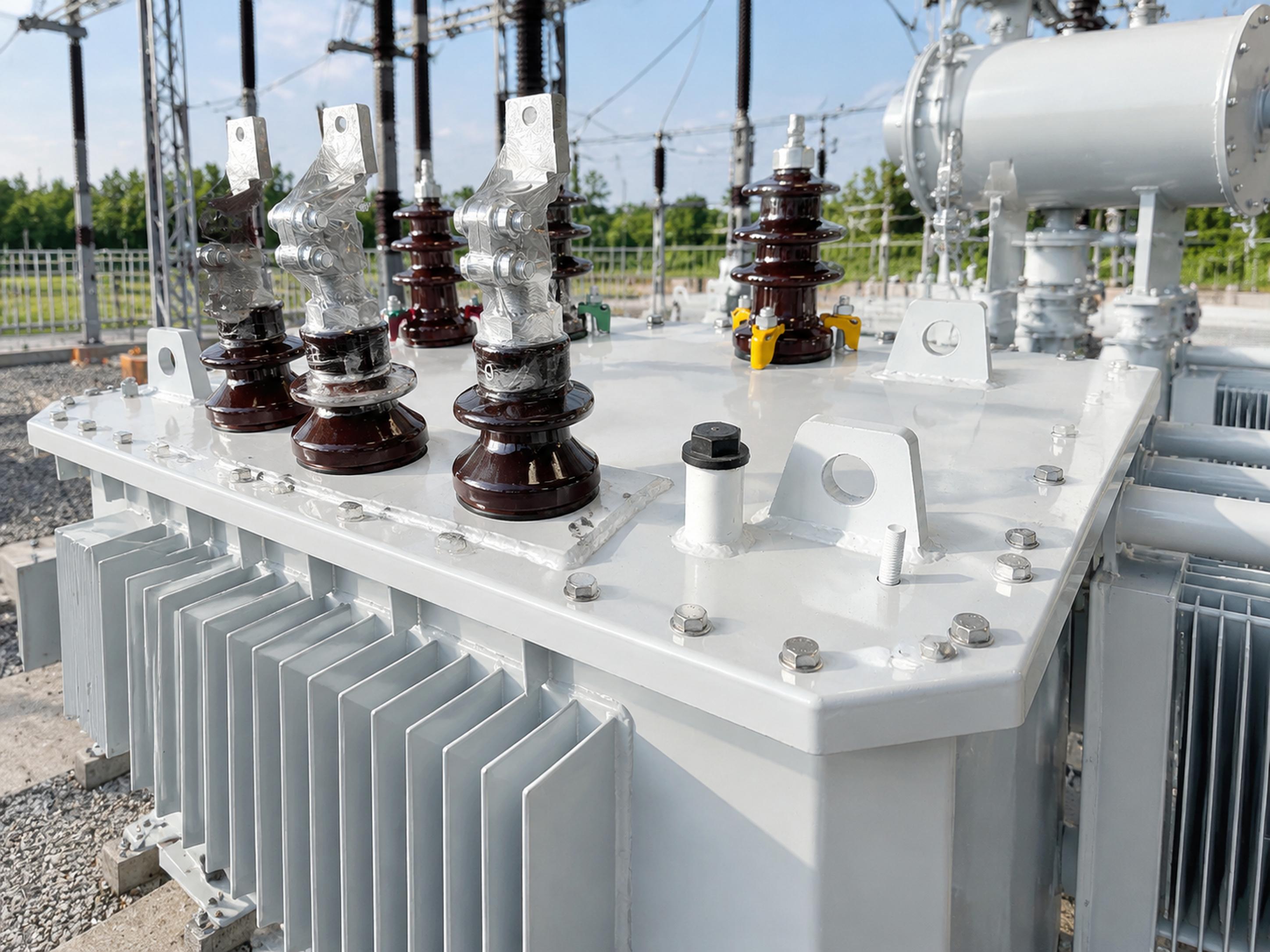
For installers working in older urban substations where every square meter counts, this compact profile often resolves a layout problem before it even becomes one.
Reading the Nameplate: What 6/10kV Actually Tells You
Voltage class matters more than most buyers initially assume. A 6/10kV rating indicates the transformer is built to handle one of two common medium-voltage distribution levels, 6kV or 10kV, depending on the regional grid standard it connects to. Pairing the wrong voltage class with your incoming supply is not a minor mismatch; it is a design failure that can show up immediately or, worse, gradually degrade insulation until a fault occurs.
Before specifying a unit, confirm these details against your site's actual supply:
- Verify the incoming medium-voltage level matches the transformer's primary rating exactly.
- Confirm the required secondary voltage aligns with downstream equipment, typically 400V for standard distribution.
- Check the kVA capacity against peak load, not average load, to avoid chronic overloading.
- Review the cooling method against the installation environment, since oil-immersed units need adequate ventilation or outdoor placement.
Skipping any one of these steps is how perfectly good equipment ends up performing poorly in the field, not because the transformer was flawed, but because it was mismatched to the job.
Core Technical Specifications at a Glance
| Specification | Detail |
|---|---|
| Series | S11 |
| Phase configuration | 3-phase |
| Voltage rating | 6/10kV |
| Cooling method | Oil-immersed |
| Tank design | Corrugated, conservator-free |
| No-load loss reduction vs. S9 | Over 30% |
| No-load current reduction vs. S9 | 45%–80% |
This table is worth returning to during the procurement stage, since it condenses the comparison points that otherwise get buried across multiple data sheets.
Monitoring: The Difference Between Reacting and Preventing
A transformer that fails without warning is far more expensive than one that fails on schedule for maintenance. That is the entire logic behind onboard monitoring. The S11 unit includes a high-precision oil level indicator and integrated temperature monitoring, mounted on the top cover alongside the tapping switch and oil drain point.
Oil level matters because insulating oil that drops below a safe threshold exposes internal windings to air and moisture, accelerating insulation breakdown. Temperature matters because sustained overheating, even without an obvious fault, shortens the service life of the paper and oil insulation system inside the tank. Having both readings visible at a glance allows maintenance staff to catch a developing problem during a routine walk-through, rather than discovering it during an unplanned outage.
For facilities running a scheduled maintenance program, these indicators turn a blind spot into a checkpoint. That is a small design detail with an outsized effect on reliability.
Where This Transformer Class Gets Deployed
Medium-voltage oil-immersed transformers in this range show up across a fairly broad set of use cases, and understanding where they fit helps clarify whether this is the right category for a given project. Typical applications include:
- Industrial power distribution grids feeding factory floors and processing plants.
- Urban and rural infrastructure projects, including substations serving residential districts.
- Commercial building electrical systems that step down medium voltage for internal distribution.
- Renewable energy integration sites, where solar or wind generation needs to connect into the broader grid.
Each of these contexts places slightly different demands on the equipment. A rural substation might prioritize low maintenance frequency because site visits are costly. A commercial building might prioritize compact footprint because mechanical room space is limited. Matching the transformer's design strengths, compactness, reduced loss, integrated monitoring, to the specific pressure points of the deployment site is where real engineering judgment comes in, rather than simply picking the highest kVA number available.
Common Questions Buyers Ask Before Specifying
Does a lower no-load loss rating mean the transformer runs cooler overall?
Not necessarily. No-load loss relates to losses incurred simply from energization, largely in the core. Load losses, which depend on current flowing through the windings, are a separate factor. A transformer can have excellent no-load performance and still run warm under heavy load, so both figures deserve attention during selection.
Is a corrugated tank design less durable than a traditional tank with a separate conservator?
According to the manufacturer, the corrugated tank is engineered specifically to flex and absorb oil expansion, which is a design response to the same thermal stress a conservator handles. Durability depends heavily on manufacturing quality and installation practice regardless of tank style, so reviewing construction details matters more than the tank type alone.
Can a 6/10kV unit be used interchangeably on either voltage without reconfiguration?
The dual rating indicates the transformer is manufactured to support either 6kV or 10kV primary input, but confirming the specific tap setting and nameplate configuration for your installation is essential before energizing the unit.
How often should the oil level and temperature indicators be checked?
This depends on the facility's maintenance schedule and criticality of the load served, but routine visual checks during scheduled rounds are standard practice for oil-immersed equipment.
Making the Final Call on Equipment Selection
Specifying transformer equipment is ultimately a balancing act between upfront cost, long-term efficiency, physical constraints, and maintenance capacity. A unit that reduces no-load loss by 30% delivers real savings only if it is correctly sized for the load. A compact corrugated tank only helps if the installation site actually benefits from the reduced footprint. None of these features operate in isolation, which is why reviewing the full specification sheet against actual site conditions remains the most reliable path to a sound decision.
Founded in 2007, FORUI has spent more than 18 years focused specifically on power transformer research, development, and manufacturing, building a product range that spans dry-type, oil-immersed, and special transformers for industries worldwide. That depth of focus is part of why operators across varied sectors, from industrial plants to renewable energy sites, continue to specify FORUI equipment when they need a high-quality power transformer that holds up to years of continuous service rather than just passing an initial inspection.
Recent Posts
- FORUI Makes a Strong Appearance at ENERGETAB Poland 2025, Deepening European Market Presence
- FORUI Presents at Uzbekistan Energy Week 2025, Contributing to Central Asia's Energy Development
- FORUI Shines at Electrical Networks of Russia 2024, Showcasing Strength of Intelligent Manufacturing
- Power Transformer Basics: How Oil-Immersed Units Keep the Grid Running
- Compact Substation: Engineering Precision in Modular Power Distribution
SUBSCRIBE
INQUIRY